Course Description
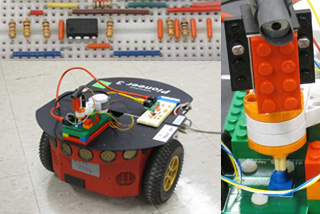
This course provides an integrated introduction to electrical engineering and computer science, taught using substantial laboratory experiments with mobile robots. Our primary goal is for you to learn to appreciate and use the fundamental design principles of modularity and abstraction in a variety of contexts from …
This course provides an integrated introduction to electrical engineering and computer science, taught using substantial laboratory experiments with mobile robots. Our primary goal is for you to learn to appreciate and use the fundamental design principles of modularity and abstraction in a variety of contexts from electrical engineering and computer science.
Our second goal is to show you that making mathematical models of real systems can help in the design and analysis of those systems. Finally, we have the more typical goals of teaching exciting and important basic material from electrical engineering and computer science, including modern software engineering, linear systems analysis, electronic circuits, and decision-making.
Course Format
This course has been designed for independent study. It includes all of the materials you will need to understand the concepts covered in this subject. The materials in this course include:
- Lecture videos from Spring 2011, taught by Prof. Dennis Freeman
- Recitation videos, developed for OCW Scholar by teaching assistant Kendra Pugh
- Course notes
- Software and design labs
- Homework assignments and additional exercises
- Nano-quizzes and exams with solutions
Content Development
Leslie Kaelbling
Jacob White
Harold Abelson
Dennis Freeman
Tomás Lozano-Pérez
Isaac Chuang
Course Info
Instructors
Departments
Learning Resource Types