Course Description
This course covers the fundamental concepts that determine the electrical, optical, magnetic and mechanical properties of metals, semiconductors, ceramics and polymers. The roles of bonding, structure (crystalline, defect, energy band and microstructure) and composition in influencing and controlling physical …
This course covers the fundamental concepts that determine the electrical, optical, magnetic and mechanical properties of metals, semiconductors, ceramics and polymers. The roles of bonding, structure (crystalline, defect, energy band and microstructure) and composition in influencing and controlling physical properties are discussed. Also included are case studies drawn from a variety of applications: semiconductor diodes and optical detectors, sensors, thin films, biomaterials, composites and cellular materials, and others.
Learning Resource Types
grading
Exam Solutions
grading
Exams
notes
Lecture Notes
assignment
Problem Sets
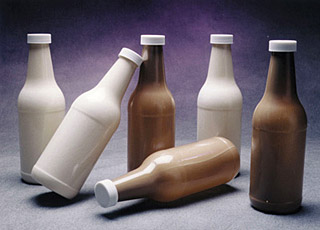
Liquid crystal polymers have proven to be exceptionally strong and ideal for food and beverage packaging. (Photo courtesy of NASA.)